
A few days ago, we attended an eye-opening webinar curated by FLO (FICCI Ladies Organisation) on MSME, ODOP & GI Tags. The session brought together voices from across the ecosystem – artisans, entrepreneurs, and small businesses – moderated by Nalini Sanwal (Day Chair), Swati Verma (Textile Initiative Head), and Poonam Sharma (National President).
One of the most impactful sessions was led by Dr. Rajni Kant, Padmashree awardee and authority on GI tags in India. What stood out? The realization that ODOP and GI tags aren’t just government jargon – they’re game-changers for artisans, small businesses, and India’s global identity.
What is ODOP and Why It Matters
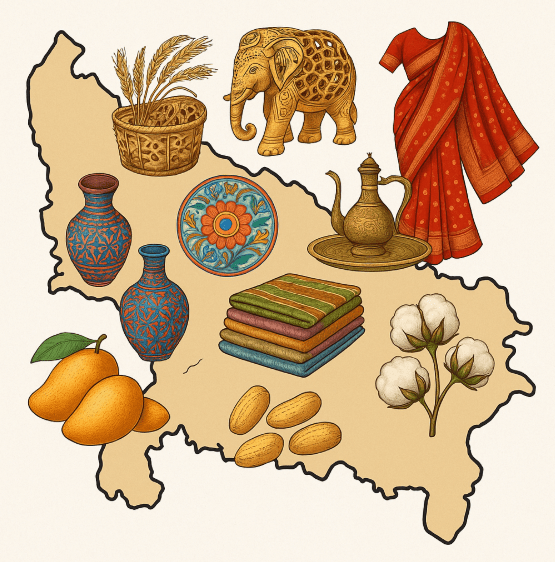
ODOP (One District One Product) is a flagship initiative that started in Uttar Pradesh in 2018 and is now spreading across India. The idea is simple yet powerful:
Every district in India has something unique – a craft, a crop, or a product. Let’s make that the hero, support its growth, and take it to the world.
In UP alone:
-
67 unique products across 75 districts are part of ODOP.
-
35 of these products already have GI tags.
-
Exports have nearly doubled – from ~$10.7 billion in 2017-18 to ~$21.9 billion in 2024-25.
This isn’t just policy – it’s grassroots economic transformation.
How the ODOP Programme Works
From the UP model, here’s what’s happening on the ground:
Training & Toolkits: Artisans get 10 days of training, stipends, and free toolkits.
Common Facility Centres: Shared design labs, packaging units, raw material banks, even testing labs.
Marketing Assistance: 75% reimbursement for artisans to showcase at national and international fairs; support to get onto e-commerce portals like Amazon and Flipkart.
Financial Help: Loans at subsidized rates, with up to 25% margin money covered.
This isn’t just skill-building – it’s turning districts into mini export hubs.
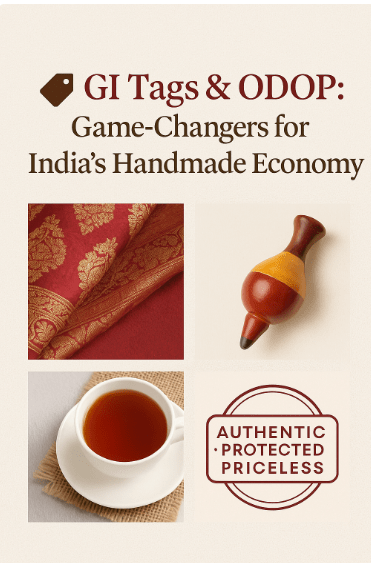
GI Tags: A Heritage Stamp
- Protects against fake imitations.
- Ensures artisans can demand fair prices.
- Preserves cultural and agricultural heritage.
- Makes products globally recognizable.
The Criteria for GI Tags
- Originate from a specific region.
- Have qualities, reputation, or characteristics linked to that region.
- Be made or processed locally.
- Represent collective heritage (not just one person’s innovation).
How We Can Support
- Buy GI-tagged products when possible.
- Gift consciously – replace mass-produced items with ODOP treasures.
- Support artisan platforms that promote these crafts.
- Spread awareness – tell the stories behind these products.
Final Takeaway
The FLO webinar reminded us that artisans and small businesses are the backbone of India’s economy. With ODOP creating district-level ecosystems and GI tags protecting authenticity, we’re witnessing a new chapter in India’s handmade story.
The government has opened the doors wide – ₹10 is all it takes for artisans to claim their legacy. The rest is up to us – to buy consciously, support intentionally, and make sure these treasures don’t just survive but thrive.
Next time you sip Darjeeling tea or wrap yourself in a Banarasi saree, remember – you’re not just indulging in beauty, you’re holding India’s heritage in your hands.